
The West Hills are the highest ground on Long Island, a tangle of glacial ridges on the border of Huntington and Melville in Suffolk County. Jayne’s Hill, at 400 feet, is the island’s summit and sits in West Hills County Park, where Walt Whitman walked as a boy. South of the Northern State Parkway the park continues as the Mount Misery Nature Preserve, 175 acres of oak, pine, huckleberry and steep sandy bridle paths threaded by two narrow roads, Sweet Hollow Road and Mount Misery Road. The Town of Huntington’s trail guide notes, with some understatement, that the woods are the subject of countless ghost stories.
What happened
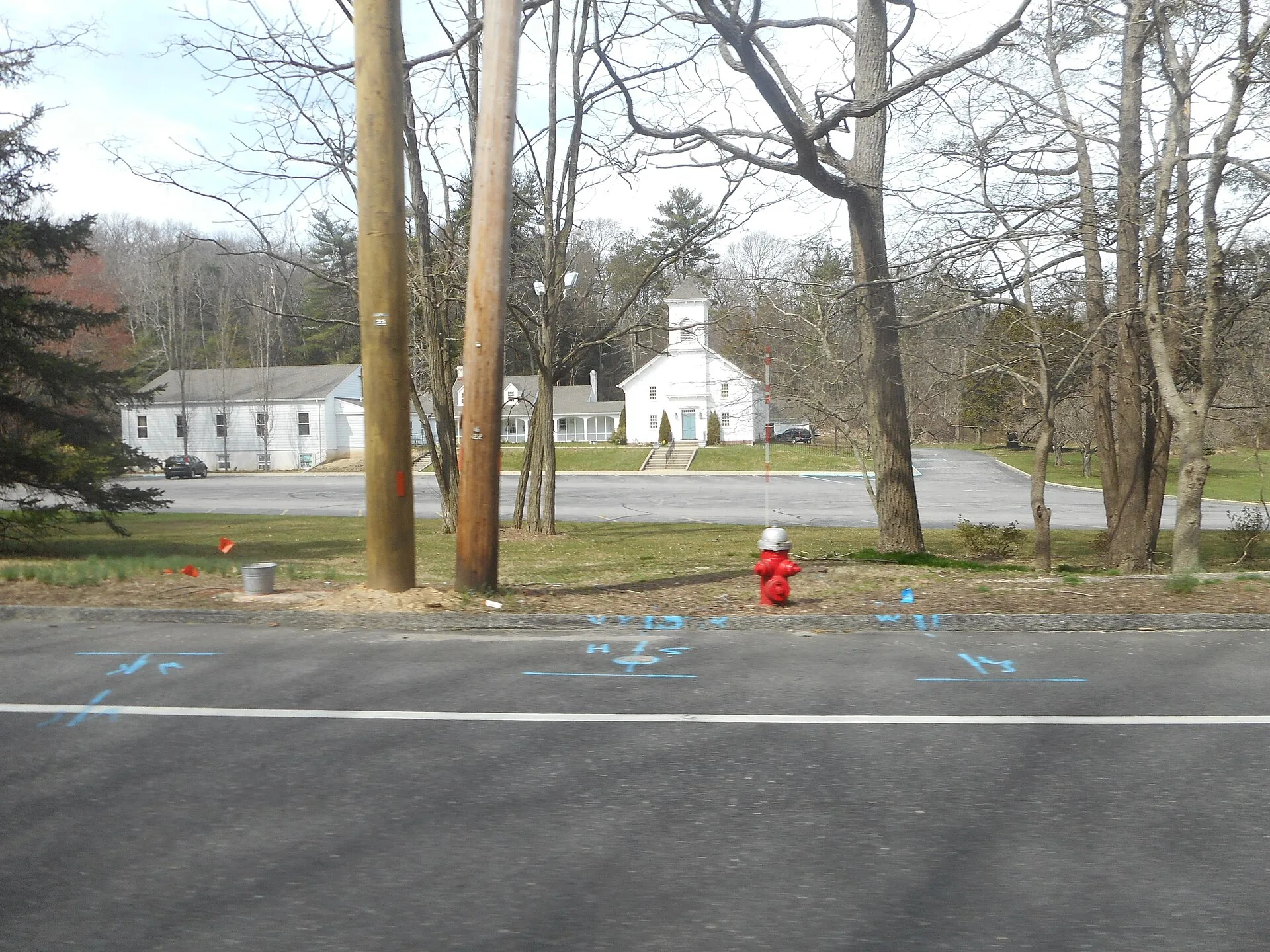
Very little that can be dated. The name is old and its origin unrecorded; the usual explanation, repeated in a study by the International Society for Contemporary Legend Research, is that the rocky slopes were miserable to farm and miserable to cross by wagon. The town guide confirms the first part: unlike most of Long Island, this land was never suitable for agriculture and stayed almost uninhabited, with a small rural community around it that built the Sweet Hollow Presbyterian Church in 1829, still standing beside the preserve.
The stories come in sets. One says an asylum stood in the woods in the 1700s or 1800s and burned with its patients and staff inside, was rebuilt and burned again, and that the nurse or patient who set the fire, usually named Mary, still walks the trails, sometimes with faceless children. Another makes Mary a farm girl who killed her family with a hatchet and then herself, after which her house sank into the ground leaving only the chimney; this is the version the town’s trail guide prints. A lady in white appears on Sweet Hollow Road; a police officer stops cars at night and is missing the back of his skull; teenagers hanged themselves from the Northern State Parkway overpass and can be summoned by honking three times; a hairy creature with red eyes and strange lights in the sky complete the set.
The one documented episode is John Keel’s. In the spring and summer of 1967, while he was chasing Mothman in West Virginia, Keel was also spending time on Long Island, where a young radio personality at WBAB in Babylon, Jaye P. Paro, hosted a show on local history and psychic lore. After Paro broadcast reports of low-flying objects over Mount Misery, cars began cruising the back roads nightly and she began receiving calls from metallic voices telling her to come to ‘the Mount’. Keel recorded an elderly woman near the summit who said four red-faced men with spotless shoes had walked up the muddy hill in April to tell her the land belonged to their tribe; a white-haired woman claiming to be a reporter who the local paper had never heard of; a couple he called Jane and Richard who lost an hour of time near the old Stimson estate in May; and Paro’s own account of being driven to a crossroads in a black Cadillac by a man with a doctor’s bag. Keel hypnotized Jane and, by his own report, ended up conversing with an entity named Apol. All of this went into The Mothman Prophecies in 1975.
The investigation
No police or town inquiry has ever been made, because nothing has been reported that police could act on. The folklorist Heather Rivera searched Huntington town records and contemporary newspapers for the asylum fire and the hatchet murders and found neither; aerial photographs show no clearing where a hospital stood. She suggested that details of the real Mason General Hospital in Brentwood, an Army psychiatric hospital opened in 1943 with more than 3,000 beds, had drifted into the story, and the Long Island historian Kerriann Flanagan Brosky told her that several separate ‘Mary’ stories had merged by the 1960s. Keel’s material has never been checked by anyone else, since his witnesses are anonymous or dead and his notes are the only record.
The explanations
Mount Misery is the model of a legend-trip site: a dark, winding road through empty woods between two suburbs, with an ominous name, a convenient overpass and a cemetery nearby. Every element of the stories is a stock motif found on roads across the country. The 1967 flap is better documented but hardly more solid. It rests on a radio host whose program invited exactly this kind of report, on witnesses Keel chose to disguise, and on Keel’s own method, which was to accept what he was told and look for the pattern. Henry Stimson’s old estate on the summit, the junkyard field where the lights were seen and the nightly parade of teenage cars were all real; the Men in Black are what Keel made of a season of phone calls and frightened young people.
Where it stands
The preserve is a quiet place to walk, which is how the Town of Huntington presents it, with the ghost stories offered as local color. Suffolk County maintains the park, horse riders use the bridle paths and the church still holds services. Mount Misery remains one of the most visited haunted roads in New York, visited for stories that no document has ever supported.